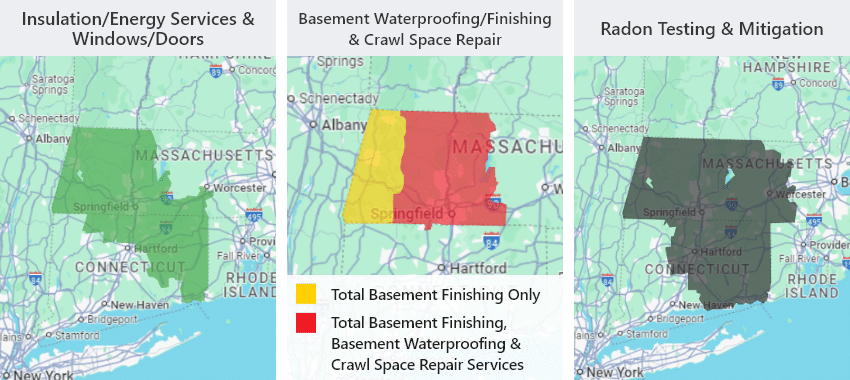
Proudly Serving Western Massachusetts, Northern Connecticut, and surrounding areas.
Fogarty's Home Services Before & After Photos
Click on a photo to enlarge.
Critter Proofing Knee Walls in Lee, MA


This homeowner called because they were experiencing "suspicious noises" in their attic and suspected they had a rodent problem.
Our Building Science Specialist went to the home and inspected the attic area. We were able to confirm that there were, in fact, several rodents living in the insulation in the kneewall areas or the unfinished area, outside of the conditioned space, separated by a "kneewall", necessary to support the roof rafters. Dr. Energy Saver went into the affected area and fully removed the existing insulation. We prepared the attic for installation of fresh, clean insulation. We Installed a SuperKneeWall™ Upgrade - Install SilverGlo™ EPS foam board with radiant barrier along roof line, gable end(s) and blocking between floor joists. We then Installed SilverGlo™ on the roof deck.
This homeowner can now enjoy a rodent free home with much better energy efficiency and lower energy bills to boot!
Installing a Sump Pump in Lee, MA


This homeowner in Lee, MA called us because he had a very wet basement in believed he had mold in the walls. When our Home Comfort Specialist arrived, he noted that they had an inadequate sump pump in the home.
We decided the best course of action was to remove that sump pump and install our TripleSafe™ super sump pump. The TripleSafe™ sump pump system has 3 pumps to protect from flooding. The first pump is a 1/3 hp, cast iron Zoeller pump that can pump up to 2,200 gallons per hour, 8 feet high. Should the first pump fail or not be able to keep up with the temporary heavy flow of water, a 1/2 AC back up pump on a separate discharge line can pump 3,900 gallons of water per hour. If the power fails, then a third, battery operated "UltraSump" pump automatically pumps up to 12,000 gallons of water out of your basement! An airtight lid keeps moisture, odors, and radon gas out of your basement.
Insulating an Attic in Lee, MA


This homeowner in Lee, MA called us hoping to get information about our mold remediation services. She had a large amount of mold in her attic. Fiberglass insulation is "mold food" and mold spreads easily in an attic if left untreated. On top of that, one of the biggest problems that was causing their mold problem was actually their inefficient insulation.
Luckily, Fogarty's Home Services had the perfect solution for this customer! We first removed all of the old insulation, preparing the attic for mold removal. After the mold was fully removed and treated, we began re-insulating the attic. We started with air-sealing all cracks and gaps with our ZypFoam™ one-part spray foam. We then installed our TiteShell™ can light covers over all can lights, sealing around them to ensure a tight fit. Then, we insulated the home using our blown-in TruSoft™ cellulose insulation. TruSoft™ insulation is blown into the attic, filling all gaps and odd shaped voids. Now, their home will be much more comfortable - and have less mold!
Insulating an Attic in Lee, MA


This homeowner in Lee, MA reached out to us hoping we would be able to replace his old, moldy attic insulation. Our Home Comfort Specialist came out to the home and recommended some solutions for his issues, including the removal and replacement of the insulation.
In this solution, we first have to remove the old blown-in attic insulation using a long hose attached to a vacuum. Once the attic was cleaned, we started on air sealing the attic with Zypfoam one part spray foam. This seals all cracks and crevices in the attic floor. We then used a different long hose attached to a machine that blows our TruSoft™ cellulose insulation into the attic. TruSoft™ cellulose is able to fill all gaps and odd-shaped voids, as it is blown in insulation.
Now, this homeowner will have a much more comfortable home!
Installing a Radon Mitigation System in Lee, MA
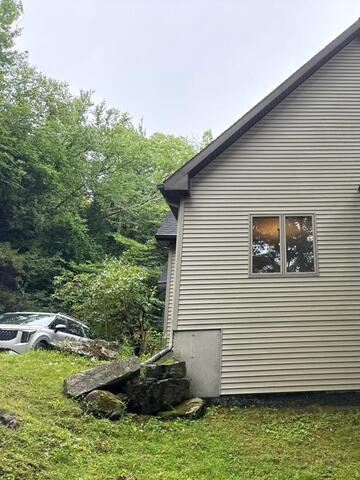
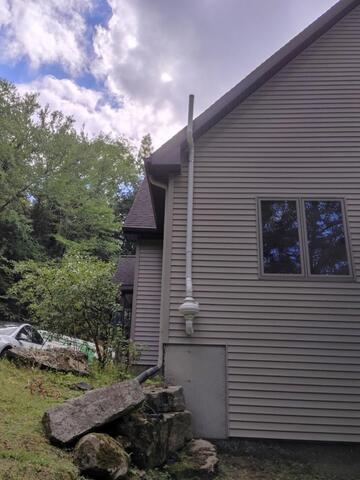
This homeowner in Lee, MA reached out to us because he was concerned about the radon levels in his home. He wanted a mitigation system installed so that his family could lower their exposure.
We were able to help this customer by installing a radon mitigation system. We began by drilling the holes in the basement -- both in the concrete slab in the bottom and the hole for the exterior penetration. He then began installing the pipes and secured them inside the home. He installed the manometer on the pipe. The manometer measures the pressure of the radon in the system, indicating whether or not it is functioning correctly. After that, he went outside to build the rest of the system. He installed the fan on the outside of the home. Once the system was installed, he went back inside, sealing around all of the cracks and gaps in the basement. He also sealed all of the holes that had been drilled for the system. Now, this homeowner has a system designed to keep the radon levels in his home low!
our service area
We serve the following areas
- Adams
- Ashley Falls
- Becket
- Berkshire
- Blandford
- Cheshire
- Chester
- Cummington
- Dalton
- Drury
- East Otis
- Glendale
- Granville
- Great Barrington
- Hinsdale
- Housatonic
- Lanesborough
- Lee
- Lenox
- Lenox Dale
- Middlefield
- Mill River
- Monroe Bridge
- Monterey
- North Adams
- North Egremont
- Otis
- Pittsfield
- Plainfield
- Richmond
- Rowe
- Sandisfield
- Savoy
- Sheffield
- South Egremont
- South Lee
- Southfield
- Stockbridge
- Tyringham
- West Stockbridge
- Williamstown
- Windsor
- Worthington
- Barkhamsted
- Burlington
- Colebrook
- North Canton
- Riverton
- West Hartland
- Winsted