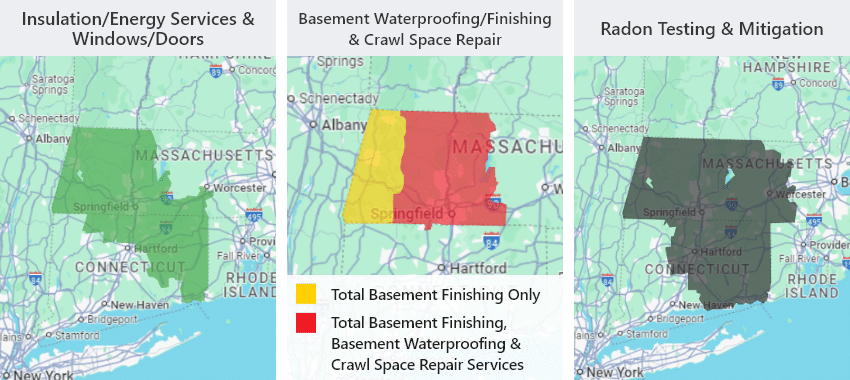
Proudly Serving Western Massachusetts, Northern Connecticut, and surrounding areas.
Fogarty's Home Services Before & After Photos
Click on a photo to enlarge.
Installing Efficient Insulation in an Attic in South Hadley, MA


This homeowner in South Hadley, MA called us out to their home to remove and replace their old insulation. This home had very old, fiberglass insulation in their attic. Fiberglass insulation is very fluffy and allows air to easily seep through, and exit or enter the home.The attic is always the first priority in regards to insulation.
First we needed to remove all of the old, nasty fiberglass insulation. We remove, bag up, and properly dispose of the old insulation. We do our air sealing before we install new insulation. This is because without air sealing you are not properly sealing the home up. We air seal all of the top plates with one-part fire retardant foam. Now we can insulate! We blow in our TruSoft cellulose insulation, this fills all of the gaps, cracks, and odd shaped voids in the attic.
This will result in a more comfortable, and energy efficient home, thanks to Dr. Energy Saver by Eco Energy Solutions!
Replacing Ineffective Insulation in South Hadley, MA


This homeowner in South Hadley, MA contacted us about having old insulation in the attic which needed to be replaced. As you can see, the previous insulation only barely made it up as high as the joist, which on average is 8 to 10 inches, only half of what is required for a home!
We removed this insulation and sealed any air leaks that were present to ensure that none of the air this homeowner pays to heat will escape through the top of the house. We the installed 20 full inches of our TruSoft cellulose insulation. We also created a catwalk to make it safe and easy to reach heating and cooling equipment that resides in the attic.
Thanks to Dr. Energy Saver this homeowner can live more comfortably and enjoy having lower energy costs!
Making a Home More Comfortable in South Hadley, MA


This homeowner in South Hadley, MA called us out to their home because they had a very old historic poorly insulated home. We knew that we needed to help this home. We removed all the old nasty fiberglass insulation because it is very old and inefficient.
You can see in the before photo we have already been in and air sealed all penetrations, and you can see we have air sealed the can lights with can heat resistant light covers over them. This will ensure once we get to our next step, blowing insulation, the lights are completely sealed and safe from any damage! Now we blow in our TruSoft Cellulose Insulation to the optimal R-Value (insulation value). If you look closely you can see our insulation ruler almost covered!
Now, thanks to Dr. Energy Saver by Eco Energy Solutions this home has updated insulation, is more comfortable, and energy efficient!
Adding a Door at the Bottom of Basement Stairs in South Hadley, MA


This homeowner in South Hadley, MA called us when she wanted to get her basement insulated. When our Home Comfort Specialist arrived, he noted that there was not a door at the bottom of the basement stairs. These stairs led up to a bulkhead door, and therefore to the outside. This was an issue, as this means that there is no insulation between the stairway and the outside air -- making the entire basement considered "outside" rather than "inside", no matter how much insulation we put in the rest of the basement.
We helped this customer by installing a new door in their home. We built custom framing to fit the dimensions of the doorway in place. Then, we installed a insulated exterior door with weather stripping. Now, the entire basement is "inside" the door instead of outside. No more uncomfortable, cold basement.
Installing a Radon Mitigation System in South Hadley, MA
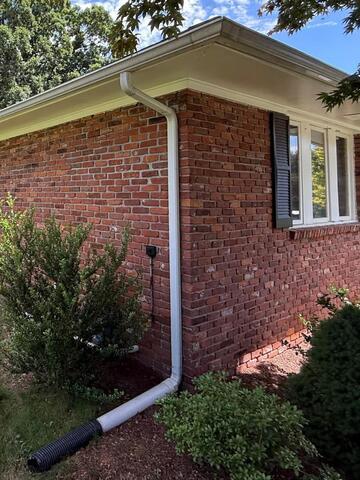
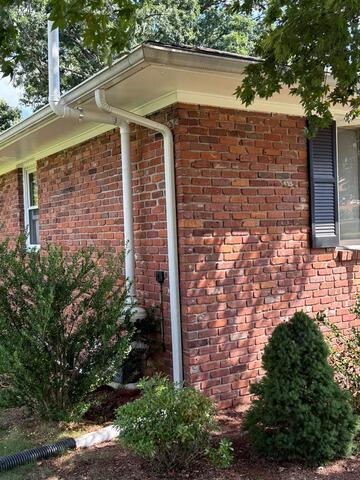
This homeowner in South Hadley, MA called us hoping to talk about installing a radon mitigation system. He was considering buying a home, and he and his real estate agent were looking for information before the sale went through. The home had an average of 5 pCi/L, and went as high as 12 pCi/L at times. We were able to work to accommodate their needs.
We were able to help this customer. Once he purchased the home, we installed a radon mitigation system. We began by drilling the holes in the basement -- both in the concrete slab in the bottom and the hole for the exterior penetration. He then began installing the pipes and secured them inside the basement. He installed the manometer on the pipe on the inside of the home. The manometer measures the pressure of the radon in the system, indicating whether or not it is functioning correctly. After that, he went outside to build the rest of the system. He installed the fan on the outside of the home. Once the system was installed, he went back inside, sealing around all of the cracks and gaps in the basement. He also sealed all of the holes that had been drilled for the system. Now, this homeowner has a system designed to keep the radon levels in his home low!
our service area
We serve the following areas
- Adams
- Ashley Falls
- Becket
- Berkshire
- Blandford
- Cheshire
- Chester
- Cummington
- Dalton
- Drury
- East Otis
- Glendale
- Granville
- Great Barrington
- Hinsdale
- Housatonic
- Lanesborough
- Lee
- Lenox
- Lenox Dale
- Middlefield
- Mill River
- Monroe Bridge
- Monterey
- North Adams
- North Egremont
- Otis
- Pittsfield
- Plainfield
- Richmond
- Rowe
- Sandisfield
- Savoy
- Sheffield
- South Egremont
- South Lee
- Southfield
- Stockbridge
- Tyringham
- West Stockbridge
- Williamstown
- Windsor
- Worthington
- Barkhamsted
- Burlington
- Colebrook
- North Canton
- Riverton
- West Hartland
- Winsted