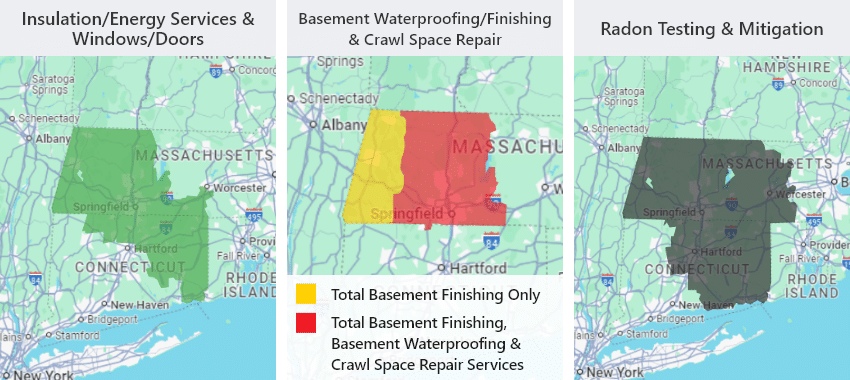
Proudly Serving Western Massachusetts, Northern Connecticut, and surrounding areas.
Fogarty's Home Services Before & After Photos
Click on a photo to enlarge.
Air Sealing a Drafty Home in Granby, CT


These young homeowners in Granby, CT had concerns about drafts in the home, especially in the walk-in closet where it was either too hot or too cold! We sat with the homeowners during their FREE in-home Energy Evaluation, and came up with a plan to make their home more comfortable!
Since this was a Cape Cod-style construction, the second floor suffered from inadequate insulation making it susceptible to air leaks, causing the home to be harder to heat in the winter and harder to cool in the summer. Our first concern was to go into the attic and remove the old, dirty insulation; over many years it sits collecting dirt, dust, pollen, bugs, rodent feces, nest, and all different kinds of undesirable things. We went in and bagged and removed the damaged and soiled insulation creating a clean space for the new insulation. We then addressed the air leaks in the attic, we need to keep an absolute boundary between our living space and the attic so inside air doesn’t move to the attic in the heating season (convection). This results in a more comfortable, less drafty home, and saves YOU money.
Thanks to Dr, Energy Saver by Eco Energy Solutions the couple's home is no more comfortable all year with much less need for heating and air conditioning.
Insulating a Basement in Williamsburg, MA
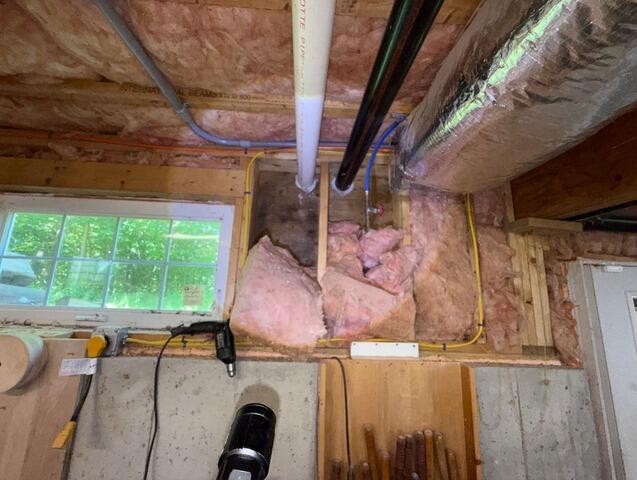
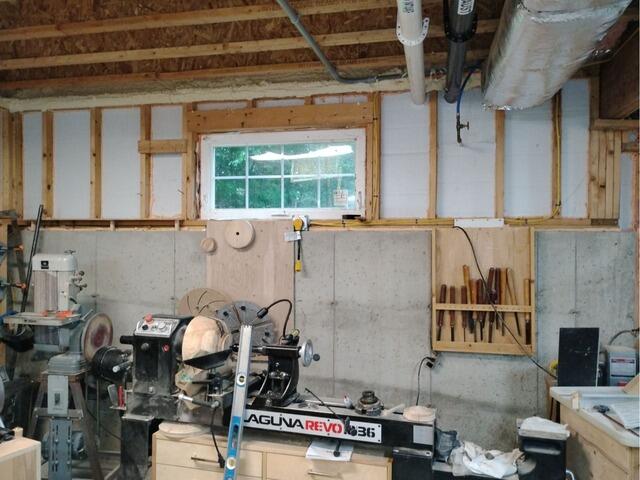
This homeowner in Williamsburg, MA reached out to us because he wanted to remove the exposed fiberglass in his basement. The basement had a mold problem as well as a water and rodent problem. The basement was half finished and half unfinished, which provided an additional concern, as the homeowner needed to make sure the water, mold, and rodents were not impacting the finished section.
We were able to help this customer. We began with tearing out the inefficient fiberglass batts and removing the mold. Our goal was to help the homeowner feel more comfortable in his home. For insulation, we utilized our Foamax polyisocyanurate board alongside two-part spray foam to insulate the basement. The Foamax polyiso board was able to fasten directly over the existing walls. Now, this homeowner is happy to have his home cleaner, brighter, and much more comfortable!
Making a Three Season Porch Livable in Southwick, MA


These homeowners met us at the Western Massachusetts Home and Garden Show where they let us know that they had a porch that they were looking to make into more livable space. With our free energy evaluation, we found that they only had a thin radiant barrier under the floor, which was not enough to keep out the cold on its own.
We removed the radiant barrier and insulated the rim joist with spray foam to create a proper seal before getting to the insulation. We then started installing our SilverGlo insulation foam board. SilverGlo is a graphite infused expended polystyrene board with a radiant barrier facing, it has 24% more insulation value than standard expanded polystyrene board. Those boards were put in place with special long screws and 3 inch washers and then any spaces between the boards were sealed with spray foam.
Thanks to Dr. Energy Saver by Eco Energy Solutions, these homeowners can enjoy this porch all year round!
Insulating an Attic in Southwick, MA


This homeowner reached out to us saying that she had high energy bills and was cold in her home. As a result, she wanted to have her attic re-insulated. Luckily, we had the perfect solution for this customer.
In this solution, we first have to remove the old fiberglass batt insulation, as well as the plywood in the attic. Once the attic was cleaned, we started on air sealing the attic with Zypfoam one part spray foam. This seals all cracks and crevices in the attic floor. We then used a long hose attached to a machine that blows our TruSoft™ cellulose insulation into the attic. TruSoft™ cellulose is able to fill all gaps and odd-shaped voids, as it is blown in insulation.
Now, this homeowner will have a much more comfortable home!
Installing a Drop Ceiling in Southwick, MA
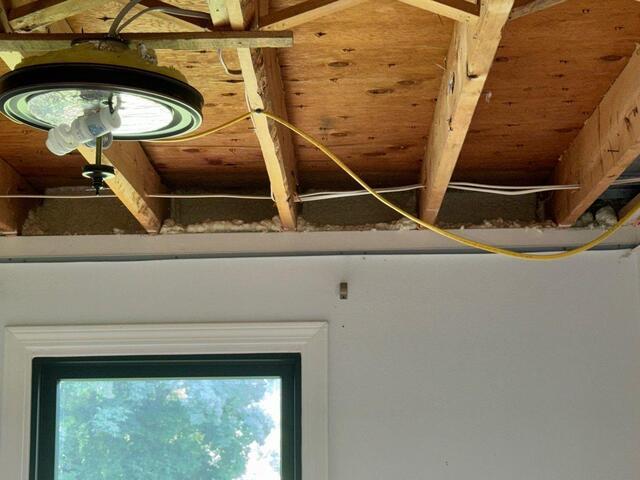
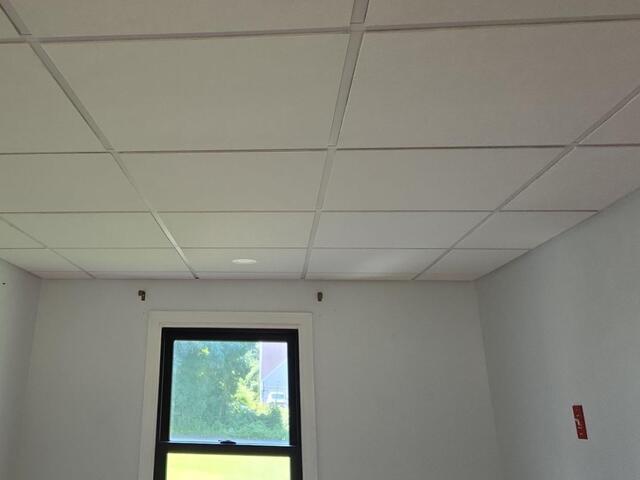
This homeowner in Southwick, MA called us hoping that we would be able to help him replace his drop ceiling. We had previously insulated his home, and when he was ready to replace the drop ceiling, he reached back out.
To install a drop ceiling, we had to first figure out what the grid needed to be for the framing. Once that was set, we install the wall molding and metal framing. Then, we install the ceiling tiles. Our basement drop ceiling tiles are 2' x 2' x 3/4"-thick. They are water resistant and are created from inorganic minteral fibers. Now, this homeowner has a beautiful new drop ceiling in his finished basement!
our service area
We serve the following areas
- Adams
- Ashley Falls
- Becket
- Berkshire
- Blandford
- Cheshire
- Chester
- Cummington
- Dalton
- Drury
- East Otis
- Glendale
- Granville
- Great Barrington
- Hinsdale
- Housatonic
- Lanesborough
- Lee
- Lenox
- Lenox Dale
- Middlefield
- Mill River
- Monroe Bridge
- Monterey
- North Adams
- North Egremont
- Otis
- Pittsfield
- Plainfield
- Richmond
- Rowe
- Sandisfield
- Savoy
- Sheffield
- South Egremont
- South Lee
- Southfield
- Stockbridge
- Tyringham
- West Stockbridge
- Williamstown
- Windsor
- Worthington
- Barkhamsted
- Burlington
- Colebrook
- North Canton
- Riverton
- West Hartland
- Winsted