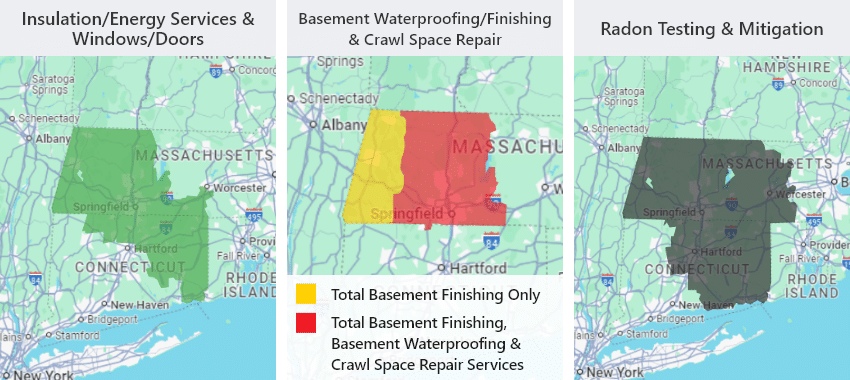
Proudly Serving Western Massachusetts, Northern Connecticut, and surrounding areas.
Fogarty's Home Services Before & After Photos
Click on a photo to enlarge.
Installing a Radon Mitigation System in Belchertown, MA
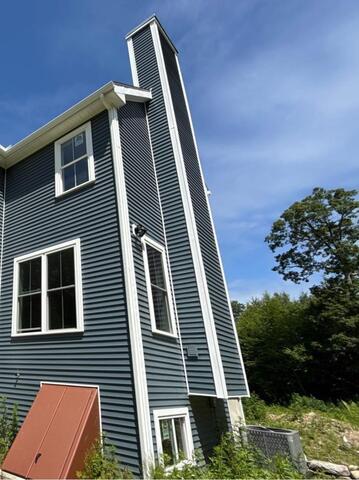
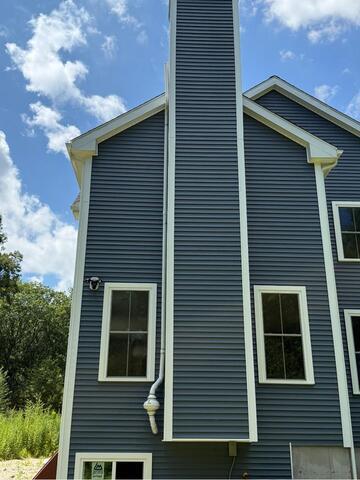
This homeowner in Belchertown, MA spoke to us initially while he and his brother were tackling a mold issue in their mother's home. When he found out a few years later that we were now doing radon mitigation, he was very excited -- he had just built his new home, and he had installed a continuous radon monitor in his basement. They found that their radon level fell between 8 and 10 pCi/L on average. This is higher than the EPA's radon action level of 4 pCi/L. This was very concerning for him, as he had a toddler in the household. He wanted his level lowered as soon as possible for the health and safety of his family.
We had the perfect solution for this customer! We installed a radon mitigation system in his home. We identified the specific space where the mitigation system should be installed. After that, we drilled a hole in the floor as well as a hole in the wall for the exterior penetration. We put together the pipes, starting in the floor, and built it out through the exterior penetration to the outside. We secured the pipes to the wall, and then installed the manometer onto the pipe. (A manometer measures the pressure of the radon gas in the system, indicating whether or not the system is functioning). We then went outside to continue building out the system. We installed the fan and continued building out the pipes, securing them to the outside of the home. Our technician then sealed around the holes that had been drilled for the system. Now, the homeowner has a brand new radon system for their new home!
Reducing a Cold and Drafty Kitchen in Ellington, CT


This homeowner in Ellington, CT called us out to their home to take a look as some problems that have been experiencing. The problem was their kitchen, their kitchen was very cold and drafty and they could not figure out why. They also had extremely high energy bills due to the amount of heat they were losing. We went to the home to perform a Full Home energy Evaluation to figure out why they were having this issue. We knew we needed to help these customers become more comfortable in a room of their home that they spend a lot of time in. While conducting the Energy Evaluation we noticed that in their basement, directly under their kitchen the walls were full of fiberglass insulation. Fiberglass insulation is soft and fluffy, and allows a great deal of cold air to travel through. Because of this it does not make for a great insulation choice. Air was seeping through this fiberglass and up into this homeowners kitchen, creating a cold and drafty living space. We knew exactly what we had to do to make these homeowners more comfortable, and energy efficient in their home.
The first thing we need to do in this homeowners basement was the nasty task of removing all of the old, fiberglass insulation. We properly bag up and dispose of this insulation and bring it off site. Next, we install our Polyisocyanurate foam insulation board on the basement walls. This isn’t just an ordinary foam board- Polyisocyanurate foam has the flame retardant properties to satisfy building codes to leave it exposed in the basement. It also has a foil facing to reflect heat so that the insulation isn’t doing all the work by itself. We make sure these boards are tightly secured with Dr. Energy Savers proprietary Foam-Tite Fasteners. This will drastically reduce this customers energy bills, and the cold, drafty kitchen.
Thanks to Dr. Energy Saver by Eco Energy Solutions, this homeowner can not live more comfortably, happy, and energy efficient in their home!!
Removing and Replacing Insulation in an Attic in Ellington, CT


This customer in Ellington, CT called us out because of a concern they were having in their home. Their concern was that they had very old, ineffective fiberglass insulation in the attic. Fiberglass insulation is super fluffy, and is not able to properly insulate a home on its own. Due to this, this home was way colder than it should be this winter. This was caused by the lack of proper insulation. Without proper insulation air can leak into your attic and out of your home, making it difficult and costly to keep a home warm.
To fix this, we use our SuperPlatform treatment. First we need to remove the existing insulation. Our installers remove all of the old insulation, bag it up, and properly dispose of the materials. Since this home contains an HVAC system in their attic we have make sure there is a proper walkway, or catwalk in the attic. This makes it so that service can be done correctly and safely in a space where there are mechanics. Next, we lay our 4" SilverGlo foam board across the wooded walkway. This will increase the insulation value by 24%. We want to make sure that none of the blown in insulation we are installing will get on to our new walkway. Next, we have to install plywood over the foam board held in place by long screws and washers. Following this step, we dense pack TruSoft cellulose insulation into any space beneath the catwalk that is not filled.
Thanks to Dr. Energy Saver by Eco Energy Solutions, this customer is warmer and ecstatic with the temperature in their home!
Replacing a Bulkhead Door in Ellington, CT


This homeowner in Ellington, CT called us looking to get his bulkhead door replaced. An inspector recommended it be replaced. Additionally, it was the door original to the house, and was decades old and rusting.
Fogarty's Home Services was able to help this customer. We were able to install a beautiful new bulkhead door. We caulked around the edges and installed flashing behind the door to ensure a tight fit. Now, it looks amazing, and the homeowner is happy!
Installing a Radon Mitigation System in Ellington, CT


This homeowner called us hoping to be able to help him with his home. He had recently tested his home using a short term radon test kit, and the radon level came back at 4.1 pCi/L. This is over the EPA's recommended Radon Action Level of 4 pCi/L. He was hoping to mitigate his radon exposure for the health and safety of himself and his family. He wanted a mitigation solution that would match his needs.
We were able to help this customer. We installed a passive radon mitigation system in his home. Once the ideal space for the system is located, our radon mitigation technician was able to install it. He first started by drilling a hole into the concrete slab in the basement. Once the core had been removed, the radon technician installed a pipe and secured it. He also installed a manometer - which measures the pressure of the radon in the system. This is the indicator of whether or not the radon system is functioning correctly. He then drilled a hole for the exterior penetration and installed pipes for that as well. He then went to the outside of the home, installing the fan. The technician then sealed all cracks, gaps, and around the holes drilled for the system. After a quick test of the system, our radon technician was done and the homeowner was happy! Now he has a brand new mitigation system that will keep his radon levels low and his family more safe.
our service area
We serve the following areas
- Adams
- Ashley Falls
- Becket
- Berkshire
- Blandford
- Cheshire
- Chester
- Cummington
- Dalton
- Drury
- East Otis
- Glendale
- Granville
- Great Barrington
- Hinsdale
- Housatonic
- Lanesborough
- Lee
- Lenox
- Lenox Dale
- Middlefield
- Mill River
- Monroe Bridge
- Monterey
- North Adams
- North Egremont
- Otis
- Pittsfield
- Plainfield
- Richmond
- Rowe
- Sandisfield
- Savoy
- Sheffield
- South Egremont
- South Lee
- Southfield
- Stockbridge
- Tyringham
- West Stockbridge
- Williamstown
- Windsor
- Worthington
- Barkhamsted
- Burlington
- Colebrook
- North Canton
- Riverton
- West Hartland
- Winsted